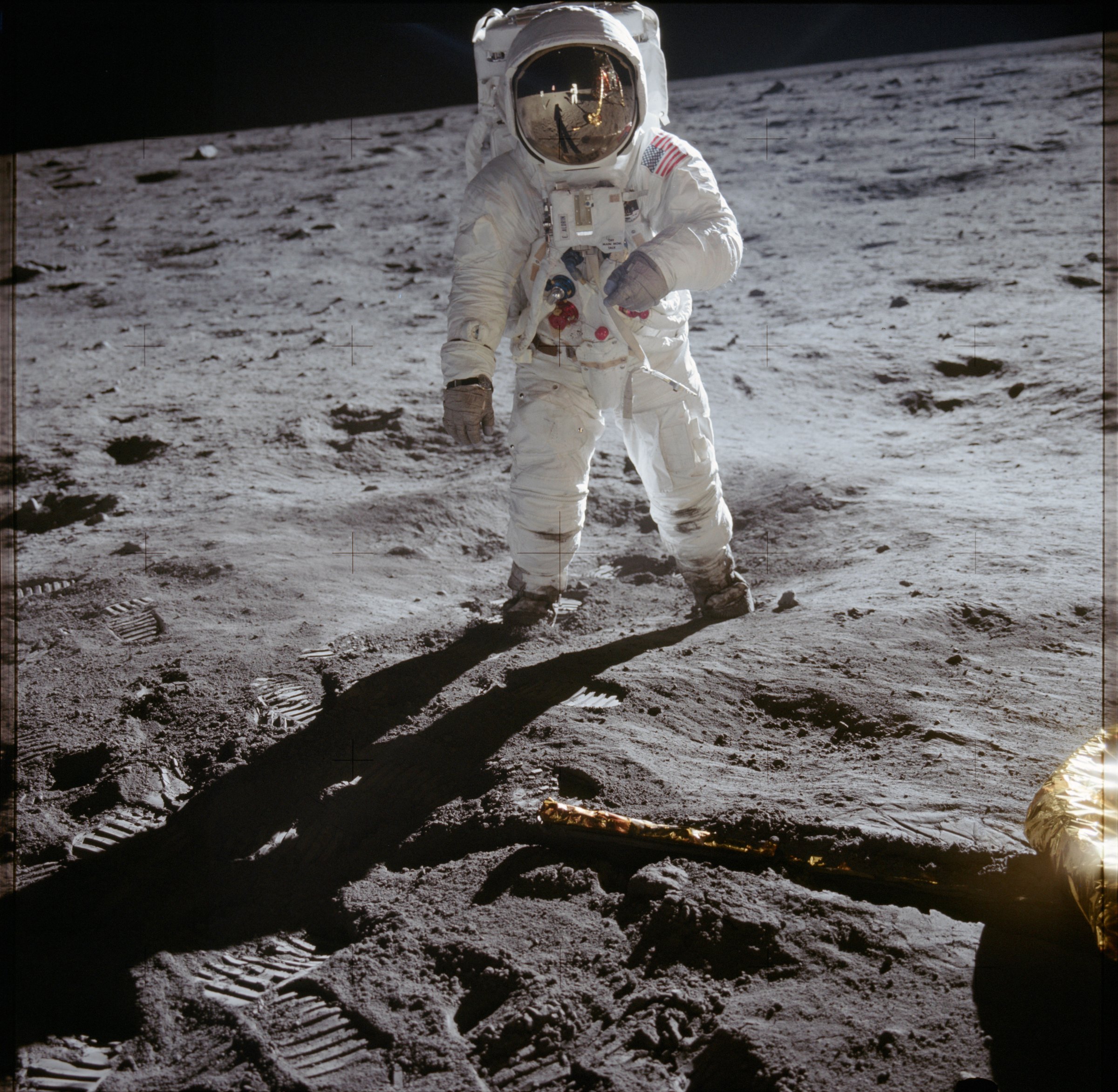
Apollo 11by the numbers
Photograph: NASA AS11-40-5903, Neil Armstrong, 20 July 1969. Dates, crew and site: NASA NSSDCA, Apollo 11 (1969-059A, 1969-059C).
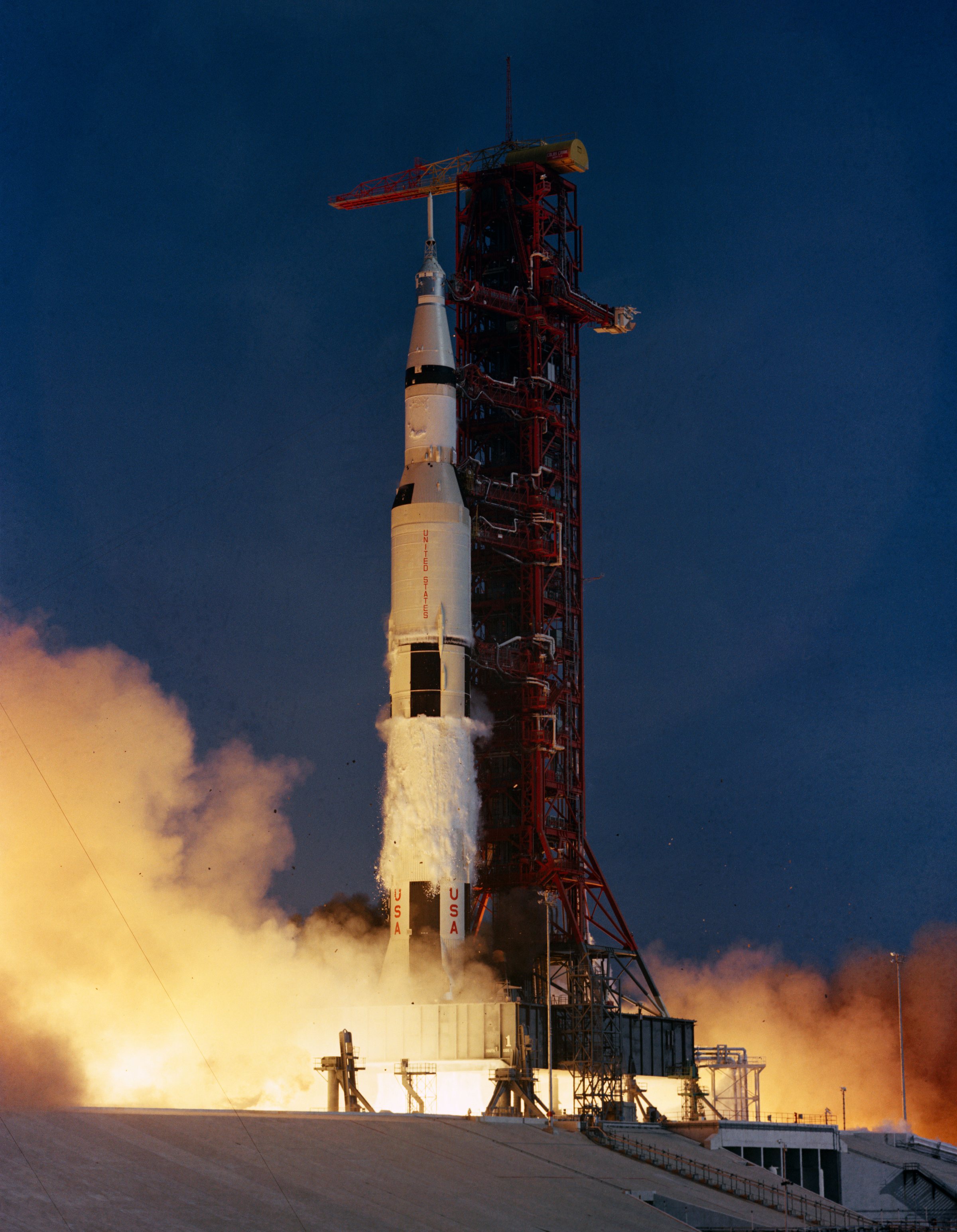
0million lb
of thrust at 9:32 a.m. on 16 July 1969: 34.5 million newtons lifting 2.8 million kilograms off Pad 39A.
Three stages. The first carried the vehicle to about 68 km; the first two fell into the ocean. The Saturn V could put 118,000 kg into Earth orbit and send 43,500 kg to the Moon.
Photograph: NASA S69-39525, Kennedy Space Center, 16 July 1969. Thrust, mass, stages and payload: NASA, "What Was the Saturn V?"; launch time: NASA, Apollo 11 Mission Overview.
363 feet. The Saturn V stood 60 feet taller than the Statue of Liberty.
111 metres from the pad to the tip of the escape tower, about the height of a 36-storey building. Fully fuelled it weighed 2.8 million kilograms.
One of three Saturn types. The first Saturn V flew without a crew as Apollo 4 in 1967; the last launched the Skylab station in 1973, also uncrewed. Apollo 11's was vehicle 506.
Heights: NASA, "What Was the Saturn V?" (111 m / 363 ft; 18 m / 60 ft taller than the Statue of Liberty), so the statue is drawn at 303 ft. Vehicle number: NASA caption S69-39525 ("Saturn 506"). Silhouettes schematic; overall heights to scale.
195 hours, 18 minutes, 35 seconds from Pad 39A to the Pacific. 21 hours 36 minutes of them were spent on the Moon.
Event times (UT): NASA NSSDCA, Apollo 11 CSM (1969-059A) and LM (1969-059C). Mission duration and surface stay: NASA, Apollo 11 Mission Overview. Drawn to scale, one axis, 16 to 24 July 1969.
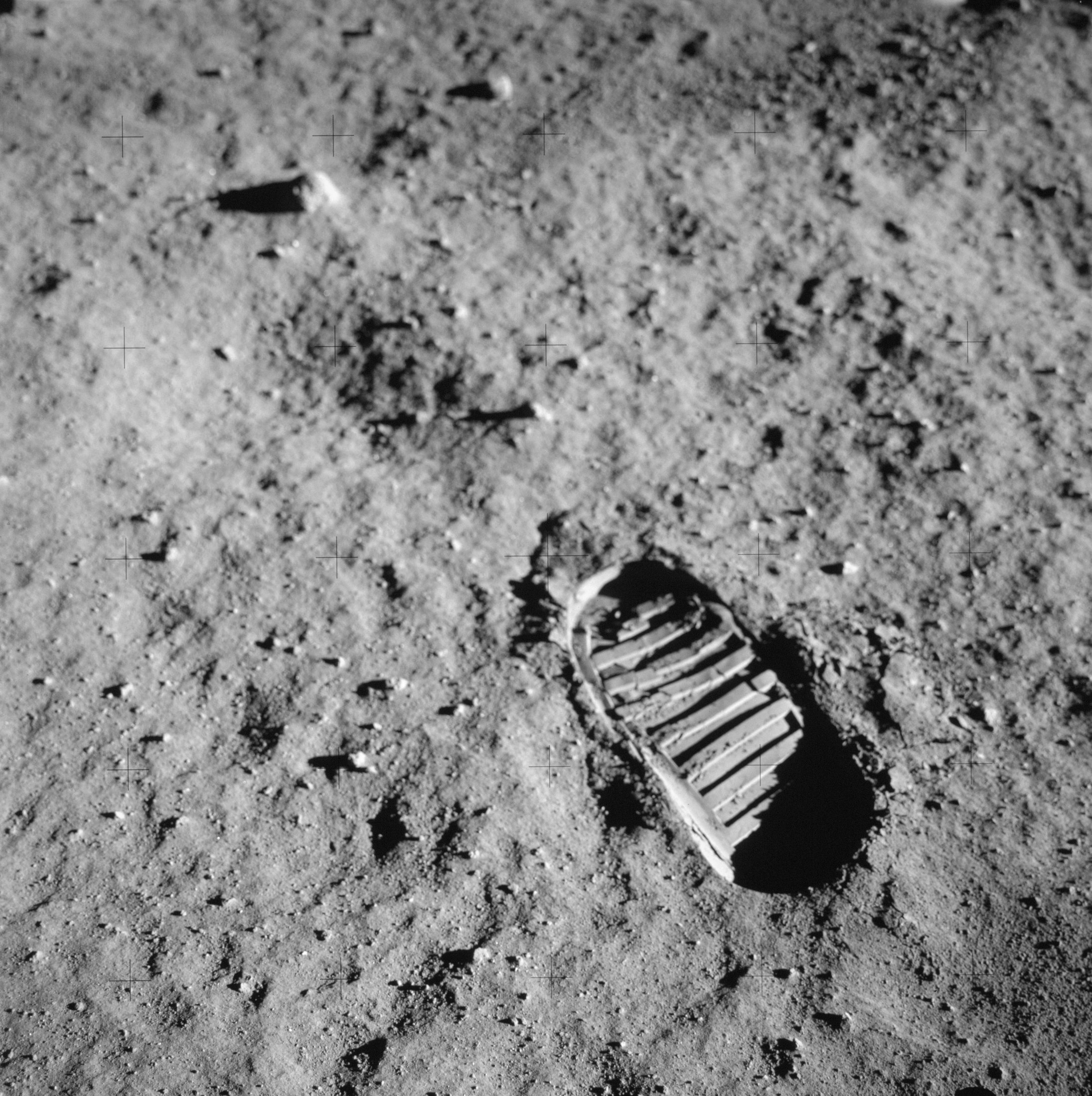
About 250 metres walked, never more than 100 metres from the Eagle.
Armstrong stepped onto the surface at 02:56:15 UT on 21 July; Aldrin followed 19 minutes later. The hatch closed at 05:11:13 UT: 2 hours 15 minutes from the first step to the end of the walk.
In that time they set up the experiments, took the photographs, and collected the rock and soil.
Photograph: NASA AS11-40-5878, 20 July 1969. Distances, times: NASA NSSDCA, Apollo 11 LM (1969-059C). The 2 h 15 min is computed from those two times; NASA's overview puts the whole EVA phase at "more than two-and-a-half hours", counted from the hatch opening.
0kg
of lunar rock and soil came home with Apollo 11.
The six Apollo landings returned 382 kg in about 2,200 separate samples. Apollo 11's share is 5.6 per cent.
Nearly 400 samples are still sent out to laboratories and classrooms every year.
Sample mass: NASA NSSDCA, Apollo 11 LM (1969-059C). Totals: NASA JSC Astromaterials, Lunar Samples (curator.jsc.nasa.gov/lunar). Bar drawn to scale: 21.55 of 382.
73 of the 195 hours were the coast to the Moon. The surface got 21.6; the walk, a little over two.
Each bar is the gap between two NASA event times, from the 13:32 UT launch on 16 July to the 16:50:35 UT splashdown on 24 July.
The six bars sum to 195.3 hours, the mission's recorded 195:18:35.
Computed from event times in NASA NSSDCA, Apollo 11 CSM (1969-059A) and LM (1969-059C); EVA bar from first step to hatch closed (1969-059C). Hours, to one decimal.
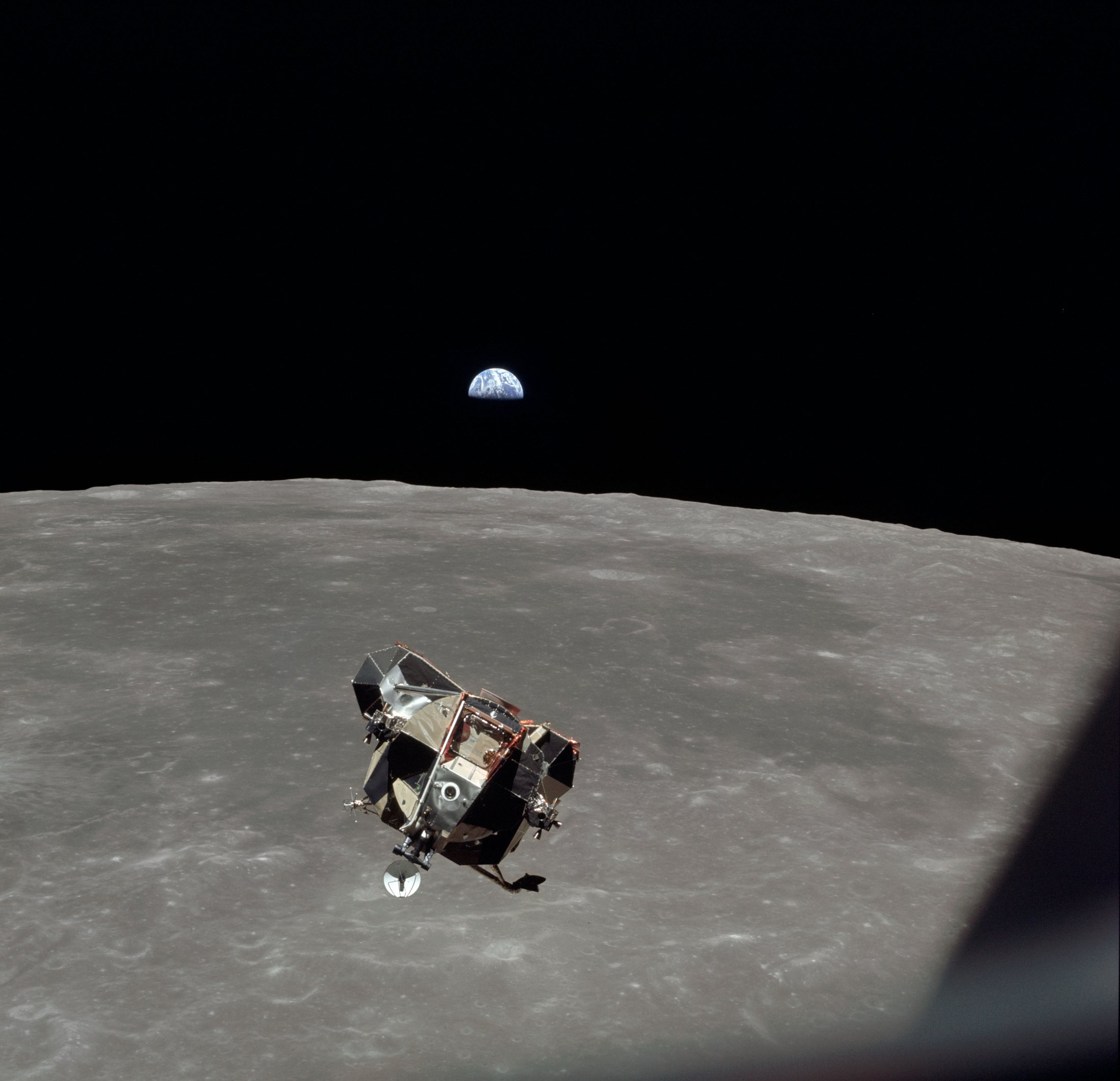
An estimated 650 million people watched the first step. The mission covered 953,054 miles in eight days.
S69-39525, Saturn V launch, KSC, 16 July 1969
AS11-40-5878, bootprint, 20 July 1969
AS11-44-6642, Eagle from Columbia, 21 July 1969
Audience and distance: NASA, Apollo 11 Mission Overview. Photograph: NASA AS11-44-6642, 21 July 1969 (Apollo 11, not the Apollo 8 Earthrise).